Why HVAC Energy Bills Spike in Arcadia
The gist: If your Arcadia HVAC bill spiked, the 3 usual causes are low refrigerant or a dirty coil, attic duct leaks, and an oversized or aging system running long against foothill heat. Arcadia Mitsubishi HVAC measures 91006 homes before recommending, so call (213) 772-2088 or book an efficiency check online.
The cheat sheet
- Top causes: low charge, dirty coil/filter, duct leaks, oversized system
- Attic supply leaks dump cooling into 130 F roof space
- Inverter Mitsubishi systems modulate and use less than old single-stage
- Zoning cuts runtime by cooling only occupied rooms
- Duct sealing add-on typically $1,900 to $6,000 in 2026 SoCal
- Filter checks monthly through Santa Ana dust season
- Open 6:30am-8pm weekdays, 8am-5pm weekends; ZIPs 91006, 91007, 91066, 91077
What is driving the cost up?
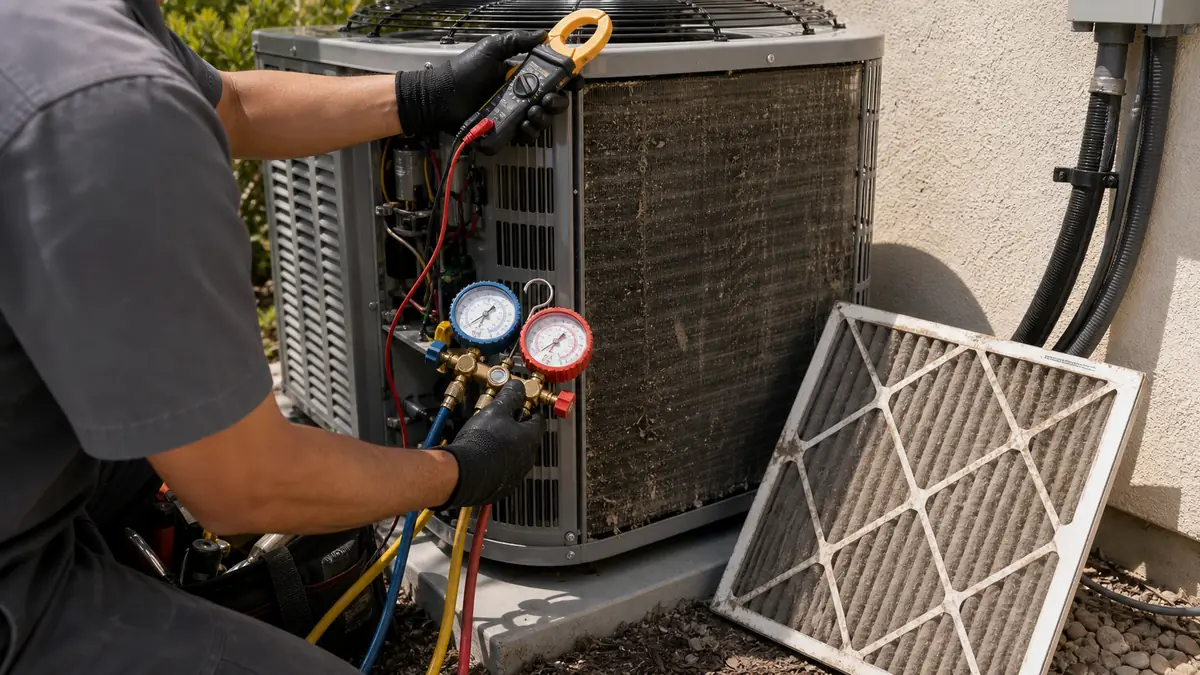
A high bill is a symptom, and in Arcadia it almost always traces to one of a few measurable causes. A system low on refrigerant or running a dirty coil loses capacity, so it runs longer for the same comfort. Ducts leaking into a 130 F summer attic throw cooled air into the roof. And an oversized or aging single-stage condenser cycles hard against the Zone 9 cooling load. We do not guess - we put gauges on the refrigerant circuit and a manometer on the ducts to find the actual loss.
| Symptom | Likely cause / first check | Cost lane |
|---|---|---|
| Runs constantly, weak cooling | Low refrigerant at a flare; U7 | $225 - $1,500 |
| Long runtimes, hot back rooms | Attic duct leaks; static-pressure test | $600 - $3,000 (seal) |
| Short, hard cycles | Oversized or aging single-stage unit | Repair vs replace |
| Iced coil, system struggles | Dirty filter or coil restricting airflow | $120 - $450 |
How do we find which cause is yours?
A bill spike has a measurable root, and we work through it in order rather than guessing. We start at the easy end: pull and inspect the filter and the indoor coil, because a restricted coil shows up as the P6 freeze-or-overheat code and quietly stretches every runtime. Next we put refrigerant gauges on the service ports and read suction pressure and superheat - a low charge from a flare leak drops capacity, often with a U7 code, so the system runs far longer for the same setpoint. Then a manometer across the air handler reads static pressure, and a quick duct check finds supply runs leaking into the attic. Finally we look at the equipment itself: an oversized single-stage condenser short-cycles, and an aging one has simply lost efficiency. Each finding maps to a different fix and a different cost lane, which is why we never quote a new system off the bill alone.
What does each fix cost to address?
The right repair depends entirely on which cause the measurements expose, so here are the approximate 2026 Southern California lanes. A dirty filter or coil is the cheapest outcome and sometimes free if you handle the filter yourself; a refrigerant leak is mid-range; sealing leaky ducts is a project; and a tired oversized condenser tips into a repair-versus-replace decision you can read on our sizing guide.
| Root cause | Code / reading | Fix lane |
|---|---|---|
| Dirty filter or coil | P6, high static pressure | $120 - $450 |
| Low refrigerant (flare leak) | U7, low superheat | $225 - $1,500 |
| Leaky attic ducts | High duct loss on manometer | $1,900 - $6,000 (seal/replace) |
| Oversized / aging condenser | Short cycles, lost capacity | Repair vs $6,000 - $16,000 replace |
Would a new Mitsubishi system lower my bill?
Often substantially, if the old unit is the problem. Replacing a 15-year-old single-stage condenser with a modulating inverter Mitsubishi system, and zoning so you cool only occupied rooms, is one of the bigger summer-bill reductions available in an Arcadia ranch home. The gains are largest when we seal the ducts in the same visit, so the new efficiency is not leaking into the attic. Our SEER2 and rebates guide covers the efficiency tiers and any current utility help.
What can I do myself before calling?
Two free checks. Swap or wash the filter - a choked filter is the single most common avoidable cause, and foothill dust loads them fast. Then clear leaves and debris off the outdoor coil so it can reject heat. If the bill is still high or a room never cools, that points to refrigerant, ducts, or sizing, which need instruments. See our maintenance calendar for the seasonal routine.
Common questions about high energy bills
Why did my Arcadia summer electric bill jump this year?
Three usual causes: a system losing efficiency (low refrigerant, dirty coil), duct leaks dumping cooled air into a 130 F attic, and longer runtimes during a hotter-than-usual stretch of Zone 9 100 F days. We measure refrigerant behavior and static pressure to find which one is costing you.
Is a mini-split cheaper to run than my old central AC?
Usually yes. A correctly sized inverter Mitsubishi system modulates instead of cycling full-on and full-off, and zoning lets you cool only occupied rooms. Homeowners replacing a 15-year-old single-stage condenser often see meaningfully lower summer bills, especially when we seal the ducts at the same time.
Will closing vents in unused rooms save money on my system?
Not on a ducted system - closing vents raises static pressure and can harm the blower and coil. The better fix is real zoning. A multi-zone Mitsubishi setup lets you simply turn off the heads in unused rooms, which actually cuts runtime without stressing the equipment.
Can a dirty filter really raise my bill?
Yes, and it is the cheapest thing to rule out. A clogged filter chokes airflow, so the system runs longer to hit setpoint and can ice the coil or trip the high-limit. On a foothill home through Santa Ana dust season, filters load up fast - check monthly in summer.